

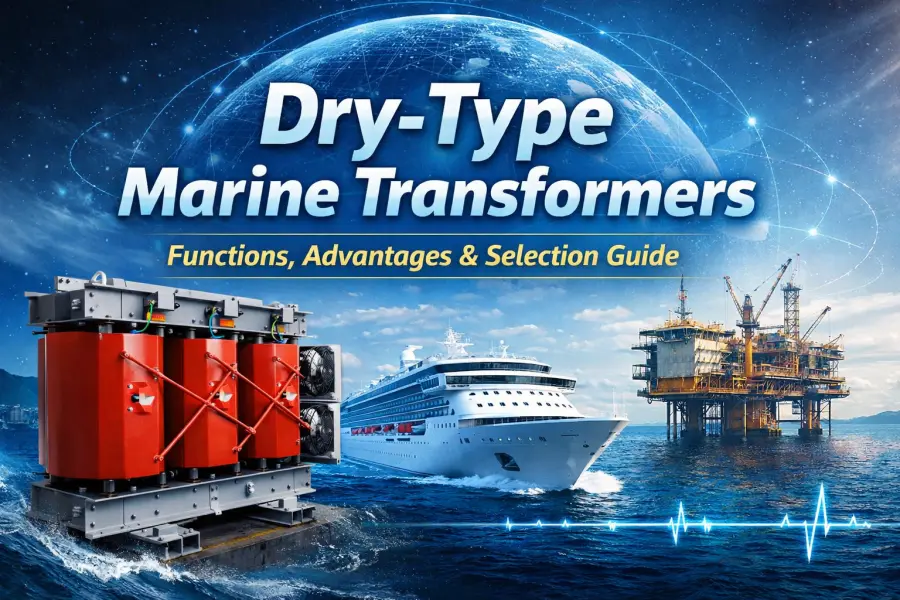
Marine power systems rely heavily on transformers to ensure safe, reliable, and efficient electricity distribution on board. With increasing electrification, automation, and environmental regulations in the shipping industry, dry-type marine transformers have become the preferred choice for modern vessels. They offer enhanced safety, low maintenance, and environmental compliance, making them ideal for commercial ships, yachts, military vessels, and offshore platforms.
This comprehensive guide covers everything you need to know about dry-type marine transformers, including:
-
Definition and structure
-
Advantages over traditional transformers
-
Applications in ship systems
-
Comparison with isolation transformers
-
Selection criteria
-
Global market trends
-
Frequently Asked Questions (FAQ)
Visit PowerNex for premium dry-type marine transformers designed for worldwide users.
1. What Are Dry-Type Marine Transformers?
A dry-type marine transformer is a type of transformer that does not use oil for insulation or cooling. Instead, it relies on epoxy resin insulation or air-cooling methods to operate efficiently in marine environments.
Unlike traditional oil-filled transformers, dry-type designs eliminate the risks of fire, oil leaks, and environmental contamination, making them particularly suitable for confined shipboard spaces, high-humidity conditions, and salty air environments.
1.1 Structure of Dry-Type Marine Transformers
The typical dry-type transformer consists of:
-
High and low voltage coils: Cast in epoxy resin to provide mechanical stability, electrical insulation, and corrosion resistance.
-
Magnetic core: Laminated high-silicon steel sheets reduce energy losses and enhance efficiency.
-
Cooling system: Can be natural air cooling (AN) or forced air cooling (AF), eliminating complex oil-based cooling infrastructure.
These structural elements make dry-type transformers durable, low-maintenance, and safe for onboard use.
1.2 Key Advantages
-
Enhanced Safety: No oil means reduced risk of fire, leakage, and explosion.
-
Environmentally Friendly: Oil-free operation reduces the risk of environmental pollution.
-
Low Maintenance: No need for oil inspections or replacement; periodic temperature and wiring checks are sufficient.
-
High Reliability: Resistant to high humidity, salt corrosion, and other harsh marine conditions.
-
Long Lifespan: High-quality copper windings and epoxy resin insulation can last 20+ years with proper maintenance.
1.3 How Dry-Type Transformers Fit Into Modern Ships
Dry-type transformers are widely used in:
-
Main propulsion systems and switchboards
-
Auxiliary systems, including lighting, HVAC, and living quarters
-
Automation and control systems, including navigation and communication
-
Offshore equipment, including wind turbines and oil rigs
Their versatility makes them indispensable in modern ship design.
2. Applications of Dry-Type Marine Transformers
Dry-type transformers are used throughout a vessel to ensure stable and reliable power distribution. Let’s look at common applications:
2.1 Main Distribution Systems
Dry-type transformers supply stable voltage to the main propulsion motors, auxiliary motors, and switchboards. They ensure the ship operates efficiently under varying loads and prevent voltage fluctuations that could damage critical machinery.
2.2 Auxiliary Systems
Shipboard auxiliary systems, such as lighting, HVAC, and living facilities, rely on dry-type transformers for consistent power. Using dry-type transformers ensures crew comfort and operational safety, especially during long voyages.
2.3 Automation and Control Systems
Modern ships include complex automation and electronic control systems for navigation, monitoring, and communication. Dry-type transformers, often paired with isolation transformers, provide stable, interference-free power, protecting sensitive devices from voltage spikes or electrical noise.
2.4 Offshore Engineering Applications
Dry-type transformers are not limited to ships. They are widely used in offshore platforms, wind turbines, underwater robotics, and marine research equipment. Their durability in corrosive and humid environments makes them ideal for offshore operations.
2.5 Advantages in Harsh Environments
-
Resistance to salt spray and corrosion in open sea conditions
-
Operation in high humidity and confined engine rooms
-
Reduced risk of fire and environmental hazards compared to oil-filled transformers
These advantages explain why dry-type transformers are becoming the global standard in marine and offshore industries.
3. Dry-Type vs Isolation Transformers: Key Differences
Understanding the difference between dry-type marine transformers and isolation transformers is essential for proper shipboard electrical system design.
| Feature | Dry-Type Marine Transformer | Isolation Transformer |
|---|---|---|
| Primary Function | Voltage step-up/down, power distribution | Electrical isolation, interference reduction |
| Insulation Type | Dry (epoxy resin or air cooling) | Dry or oil; designed for isolation |
| Safety Features | Fire-resistant, no oil leakage | Protects equipment and crew from electrical faults |
| Applications | Propulsion motors, switchboards, auxiliary loads | Navigation systems, communication, sensitive electronics |
| Maintenance | Low | Dry: low; Oil-filled: requires regular checks |
Summary: Dry-type transformers focus on power delivery, while isolation transformers focus on protecting sensitive systems. Both are often used together in modern vessels to ensure efficiency and safety.
4. Selection Criteria for Dry-Type Marine Transformers
Choosing the correct transformer for your vessel requires careful consideration:
4.1 Rated Power
Calculate the total load from main propulsion, auxiliary systems, and electronic equipment. Dry-type transformers are available from tens of kVA to multiple MVA, depending on vessel size and power requirements.
4.2 Voltage Levels
Ensure the transformer voltage levels match the ship’s electrical system:
-
Low voltage: 400V, 440V, 690V
-
High voltage: 6kV, 10kV, 11kV
4.3 Installation Environment
-
Assess available space in engine rooms or switchboard compartments
-
Consider ventilation, humidity, and proximity to sensitive equipment
-
Dry-type transformers are ideal for confined, high-humidity, and salt-exposed areas
4.4 Cooling Method
-
Natural Air Cooling (AN): For small to medium vessels
-
Forced Air Cooling (AF): For larger vessels or high-power applications
4.5 Certification and Compliance
Ensure compliance with IEC, ABS, LR, DNV, or other marine classification standards. Certification ensures safety, regulatory compliance, and simplifies global maintenance.
5. Advantages of Choosing PowerNex Dry-Type Transformers
PowerNex delivers high-performance, reliable dry-type transformers worldwide.
Key Advantages:
-
International Certifications: IEC, ABS, LR, DNV
-
Customized Design: Based on vessel power, voltage, environment, and cooling needs
-
Premium Materials: Epoxy resin coils, corrosion-resistant, long lifespan
-
Global Shipping: Fast delivery to Europe, Americas, Asia, and beyond
-
Technical Support: Installation, commissioning, and maintenance guidance
With PowerNex transformers, ships enjoy safe, reliable, and efficient power systems.
6. Global Trends and Market Demand
The demand for dry-type marine transformers is growing due to:
-
Electrification and automation of modern vessels
-
Environmental regulations requiring oil-free equipment
-
High reliability and safety standards for commercial and military ships
Regional Insights:
-
Europe & North America: Focus on safety, environmental compliance, and advanced commercial/military ships
-
Asia: Rapid growth in commercial shipping and offshore projects
-
Middle East & Africa: High durability required in extreme climates
Investing in dry-type transformers reduces operational risk, maintenance costs, and ensures compliance with international regulations.
7. FAQ: Dry-Type Marine Transformers
Q1: Which types of vessels are suitable for dry-type transformers?
A: Dry-type transformers are suitable for commercial vessels, yachts, military ships, and offshore platforms.
Q2: Can dry-type and isolation transformers be used together?
A: Yes. Dry-type transformers provide power distribution, while isolation transformers protect sensitive electronic equipment. They complement each other.
Q3: How often should dry-type marine transformers be maintained?
A: They require minimal maintenance. Periodic inspections of wiring and temperature rise checks are sufficient.
Q4: Does PowerNex provide custom dry-type transformers?
A: Yes. We customize based on vessel power, voltage, cooling method, and installation environment.
Q5: What is the lifespan of a dry-type marine transformer?
A: Typically 20+ years, depending on operating environment and load conditions.
Q6: Are dry-type transformers safe for confined engine rooms?
A: Yes. The absence of oil significantly reduces fire risk, making them safe for confined marine spaces.
Q7: Can dry-type transformers handle harsh marine climates?
A: Yes. Epoxy insulation and corrosion-resistant materials allow reliable operation in humid, salty, and high-temperature conditions.
8. Conclusion
Dry-type marine transformers are essential for modern ships, offering safety, reliability, and environmental compliance. While isolation transformers protect sensitive electronics, dry-type transformers ensure efficient power distribution across propulsion, auxiliary, and automation systems.
Choosing a certified, high-quality transformer, like those from PowerNex, ensures your vessel meets global safety standards, reduces maintenance costs, and maintains reliable operation for decades. Our dry-type marine transformers are available in a wide range of capacities to suit every shipboard application, including 5kVA, 30kVA, 45kVA, 50kVA, 75kVA, 100kVA, 200kVA, 300kVA, and larger custom sizes, providing flexibility for propulsion systems, auxiliary loads, and automation equipment.